
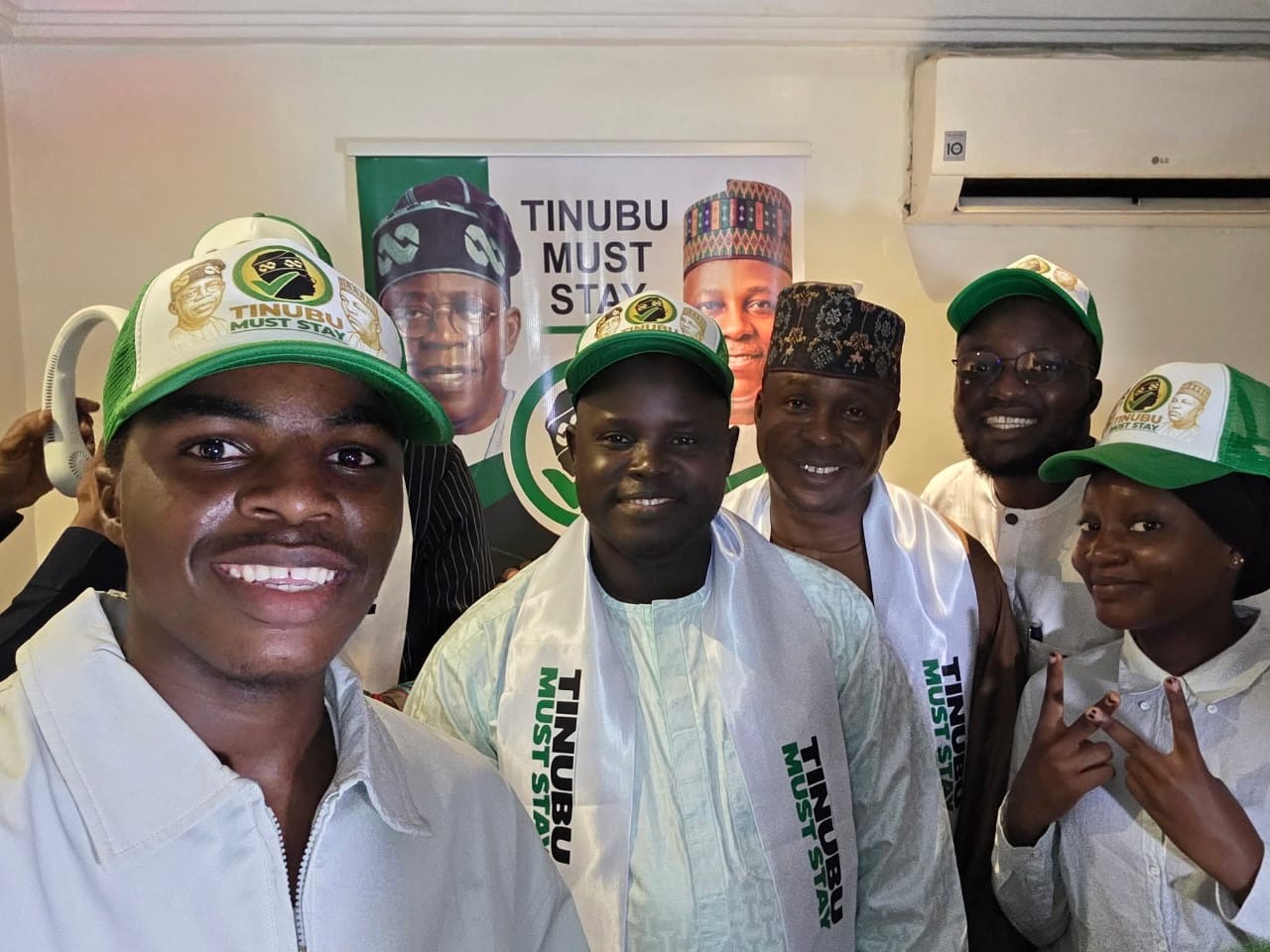
In Lagos, TMS Movement Defends Push for Tinubu’s 2027 Re‑Election, Says Reforms Need Continuity
The Convener of the Tinubu Must Stay (TMS) movement, Engr. Ibrahim Uba, has defended the group’s advocacy for President Bola Ahmed Tinubu’s re‑election in 2027, arguing that the administration’s ongoing economic and governance reforms require continuity to achieve long‑term national impact.
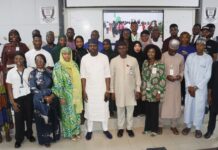
Speaking at a stakeholders’ advocacy engagement in Lagos, Uba described TMS as an independent civic platform committed to promoting continuity, stability and sustained reforms rather than abrupt political transitions. His remarks were contained in a statement issued by the movement’s Director of Communication and Media Relations, Mr. Adebisi Adams.
Uba said the movement was inspired by the belief that Nigeria’s democratic and economic development would be better served by allowing foundational reforms to mature instead of being disrupted by frequent leadership changes. He described TMS as a civic‑driven initiative focused on educating citizens on government policies, mobilising public support for reform programmes and building a broad coalition committed to policy consistency and national development.
Responding to concerns over the movement’s name, “Tinubu Must Stay,” Uba said it reflected a conviction that continuity was essential to consolidate ongoing reforms. He cited structural changes in fiscal discipline, infrastructure development, digital governance and national security modernisation as reforms that require time to yield measurable results.
Uba acknowledged the economic hardship experienced by many Nigerians following the removal of fuel subsidy and foreign‑exchange reforms, but insisted the measures were necessary to stabilise the economy. He said the objective was to correct longstanding structural distortions and lay the foundation for sustainable growth, increased investment and improved fiscal health.
He stressed that TMS operates independently of both the All Progressives Congress (APC) and the Presidency, describing it as a citizens’ movement driven by volunteers from diverse political, social and professional backgrounds. The organisation maintains a decentralised structure with coordinators across various states and is funded through voluntary contributions rather than government or party financing.
Read Also:
Addressing criticisms that early advocacy for the 2027 elections could distract the government from governance, Uba argued that democratic participation extends beyond election periods. He said citizens have the constitutional right to organise, evaluate leadership and advocate for continuity or change, adding that TMS complements governance by promoting informed debate and countering misinformation.


He also responded to opposition calls for political change in 2027, saying leadership should be assessed based on objective performance rather than political sentiments. “Opposition remains an essential component of democracy. However, change should be meaningful and evidence‑based, not merely reactionary,” he said.
On concerns that regional or ethnic politics could limit acceptance of the movement, Uba said TMS would adopt an issue‑based approach centred on infrastructure development, security, economic reforms and inclusive governance. He maintained that the movement was national in outlook and intended to engage citizens across all regions through dialogue and evidence‑based advocacy.
Uba said TMS would combine grassroots mobilisation with digital advocacy, media campaigns and policy education to encourage wider civic participation. He described the organisation as a hybrid movement focused on community outreach, coalition‑building and informed public engagement rather than political lobbying.
Appealing to Nigerians yet to decide on President Tinubu’s re‑election bid, Uba urged citizens to evaluate the long‑term implications of continuity against the consequences of policy disruption. “Nigeria is undergoing foundational reforms that require time, patience and consistency. We urge Nigerians to look beyond partisan politics, assess the progress being made and support continuity for sustainable national development,” he said.
Speakers at the Lagos briefing highlighted several government interventions, including more than 1.5 million beneficiaries of the NELFUND student‑loan programme, over ₦282 billion disbursed, more than 160,000 trained fellows under the 3 Million Technical Talent (3MTT) programme, and over 120,000 vehicles converted to compressed natural gas (CNG) nationwide. They also cited interventions in fertiliser distribution, improved seedlings, mechanisation, irrigation financing and market access.
On security, speakers said government operations against insurgency, banditry, kidnapping and oil theft had intensified, but stressed that progress must ultimately be measured by improvements in the safety of communities, roads, farms and businesses.
The briefing also touched on infrastructure, housing and ongoing debates around the Academic Staff Union of Universities (ASUU). TMS said its organisational structure runs from national leadership through geopolitical zone coordinators to state coordinators across the country.
Speakers concluded by acknowledging that statistics alone do not erase the difficulties faced by Nigerians. They urged citizens to question government, verify claims, scrutinise policies and demand results, while also acknowledging achievements where evidence supports them.





 movement, Engr. Ibrahim Uba, has defended the group’s advocacy for President Bola Ahmed Tinubu’s)