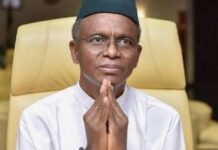
Pantami’s Gombe Journey: A Test of Resilience, Leadership and Destiny
By Idris Umar Feta
There is an enduring saying that tough times never last, but tough people do. Few political journeys ahead of the 2027 governorship election in Gombe State illustrate this philosophy more vividly than that of Professor Isa Ali Ibrahim Pantami, whose ambition has been tested by political setbacks, internal party disagreements, courtroom battles and electoral uncertainties.
For Pantami, the road to the Gombe Government House has been anything but smooth. Yet, at every difficult turn, he has demonstrated a determination to remain in the contest. Like gold refined through fire, his political ambition appears to have gained renewed strength from the obstacles encountered along the way.
His experience offers a compelling lesson about resilience, political conviction and the importance of perseverance in the face of adversity. It also raises fundamental questions about internal party democracy, political tolerance and the kind of leadership Gombe State deserves.
Pantami’s journey initially encountered difficulties within the All Progressives Congress (APC), where he expressed dissatisfaction with the process that produced Jamilu Ishiaku Gwamna as the party’s governorship candidate. Believing that the contest had not provided a level playing field, he withdrew and subsequently joined the Peoples Democratic Party (PDP).
For some politicians, such a setback might have marked the end of their ambitions. Pantami, however, chose another path. He entered the PDP’s governorship contest and secured its ticket, presenting himself as an alternative to the political establishment he had left behind.
But securing the nomination did not bring an end to his challenges.
A Federal High Court in Gombe subsequently nullified his emergence and ordered a fresh primary election. Rather than abandon the contest, Pantami returned to the political arena, participated in the rerun and again emerged victorious against Hamisu Ahmed Mailantarki and Usman Aliyu Gary.
The outcome reinforced the confidence of his supporters, who interpreted his repeated emergence as evidence of organisational strength and growing acceptance within his new political platform.
Another obstacle arose when his name was initially omitted from the Independent National Electoral Commission (INEC) candidate list published on October 10, 2026. The subsequent restoration of his name ensured that he remained in contention for the February 6, 2027 governorship election.
From the APC nomination dispute to the PDP primary, from the courtroom to the INEC candidate list, Pantami’s political journey has been characterised by one challenge after another.
For his supporters, these developments represent more than procedural victories. They symbolise the determination of a candidate unwilling to surrender his ambition in the face of adversity.
However, resilience alone does not guarantee electoral success. It must ultimately be accompanied by political organisation, public trust and a convincing programme for governance.
### The Gombe Homecoming and the Politics of Intimidation
When Pantami returned to Gombe to formally commence his campaign, the reception demonstrated the enthusiasm of his supporters.
A large crowd reportedly gathered at Lawanti Airport, while others lined the route leading into the state capital. The excitement continued through Gombe town to the Emir’s Palace, where supporters waved party flags, sang solidarity songs and welcomed the governorship candidate.
The gathering reflected the considerable attention his candidacy has attracted. Although crowd size is not necessarily a reliable measure of electoral strength, such mobilisation suggests that Pantami has established an active support base capable of generating political enthusiasm.
Unfortunately, the homecoming was reportedly overshadowed by an incident along Jekadafari Road.
Suspected political thugs allegedly erected a bonfire and attacked some of Pantami’s supporters near the family residence of Governor Muhammadu Inuwa Yahaya, apparently in an attempt to disrupt the movement of his convoy.
The Gombe State Police Command reportedly commenced an investigation into the incident. Until the facts are established, responsibility should not be attributed to any individual, political party or government official without credible evidence.
What deserves recognition, however, is Pantami’s reported response to the provocation.
Rather than encouraging retaliation, he appealed to his supporters to remain calm, peaceful and law-abiding.
Such restraint is essential in a political environment where inflammatory statements and confrontations can easily escalate into violence.
Democracy is not a battlefield where political opponents must be physically defeated. It is a system in which competing candidates present their programmes, persuade voters and submit themselves to the judgment of the electorate.
Every candidate, whether representing the APC, PDP or another political party, must be allowed to campaign freely and safely.
Gombe deserves an election determined by ideas, competence and public confidence rather than intimidation, threats or violence.
### Leadership Beyond Religious and Political Boundaries
Another development that attracted my attention was a video circulated on social media in which an individual criticised Pantami for engaging with Christians in Gombe State.
Such criticism raises a troubling question about our understanding of political leadership in a religiously diverse society.
Pantami is seeking election as Governor of Gombe State, not as the leader of a particular religious community.
Gombe belongs equally to Muslims, Christians and citizens of different beliefs and backgrounds. Its development challenges do not discriminate according to religion, ethnicity or political affiliation.
Read Also:
Poor roads affect everyone. Inadequate healthcare facilities endanger families regardless of their faith. Unemployment, insecurity and educational deficiencies impose burdens on communities without regard to religious identity.
A governorship candidate who seeks to engage Christians, Muslims, traditional institutions, community leaders and other stakeholders should therefore be encouraged rather than condemned.


Political leadership requires building bridges across differences, not erecting barriers between communities.
Indeed, one of the most important responsibilities of a governor is to ensure that every resident feels represented, protected and included in the development process.
Pantami’s engagement with different religious communities should be assessed within that broader obligation to promote peaceful coexistence and inclusive governance.
The ability to communicate across social and religious boundaries is particularly important in a state where sustainable development depends on cooperation among diverse communities.
### From Digital Governance to State Development
Beyond the controversies surrounding his nomination, Pantami’s professional background remains a significant aspect of his candidacy.
As a former Director-General of the National Information Technology Development Agency (NITDA) and Minister of Communications and Digital Economy, he acquired experience in federal public administration, technology policy and institutional coordination.
During his tenure, he championed initiatives associated with broadband expansion, the deployment of fifth-generation telecommunications technology, Emergency Communications Centres, digital skills development and the strengthening of data protection frameworks.
He also promoted digital literacy, innovation and the use of technology to support economic development.
These experiences provide a basis for examining what he could bring to governance in Gombe State.
However, experience at the federal level is not automatically a guarantee of success in state administration. The real question is how such knowledge can be translated into practical solutions for the people.
Gombe requires sustained improvements in education, healthcare, agriculture, infrastructure, security and employment.
Technology could play an important role in addressing these challenges through improved public financial management, transparent revenue administration, digital education, agricultural information services and more efficient healthcare delivery.
For instance, digital platforms could strengthen government accountability, simplify access to public services and support small businesses. Investment in information and communication technology could also create opportunities for young entrepreneurs and skilled professionals.
But these possibilities must be supported by realistic policies, adequate financing and effective implementation.
Pantami’s challenge is therefore to move beyond references to his previous appointments and demonstrate how his experience would translate into a credible development agenda for Gombe.
Voters deserve to understand his priorities, proposed interventions, funding strategies and mechanisms for measuring performance.
### The Real Test Lies Ahead
Considering the hurdles Pantami has encountered, it is understandable that his supporters sometimes wonder why his ambition has faced so many obstacles.
However, political disagreements and legal challenges are not, by themselves, evidence of a coordinated effort to prevent a particular candidate from contesting an election.
Party primaries, judicial proceedings and electoral regulations are established components of democratic competition. Their legitimacy depends on whether they are conducted fairly, transparently and in accordance with the law.
What matters is that every aspirant receives due process and that disputes are resolved without political intimidation or interference.
Pantami has demonstrated persistence through the challenges described. His supporters believe that his professional credentials, federal experience, grassroots mobilisation and political network make him a formidable contender.
Others may hold different assessments of his record, suitability and political prospects. That diversity of opinion is precisely what makes democratic competition meaningful.
The February 6, 2027 governorship election should therefore be an opportunity for the people of Gombe to compare candidates on the strength of their ideas, leadership capacity, integrity and development programmes.
The contest must not be reduced to political personalities, religious sentiments or the size of campaign gatherings.
For Pantami, the next stage requires presenting a compelling vision capable of addressing the aspirations of farmers, traders, civil servants, entrepreneurs, women and young people across the state.
For his opponents, the responsibility is to offer credible alternatives and allow voters to make informed decisions.
For political supporters on all sides, the obligation is to reject violence and respect the democratic rights of competing candidates.
Ultimately, the people of Gombe must remain the final arbiters of the state’s political future.
Pantami’s journey from the APC nomination dispute to his emergence as a PDP governorship candidate has demonstrated determination in the face of considerable challenges.
Yet the greatest test of political resilience is not merely overcoming obstacles to secure a nomination. It is earning the confidence of citizens and demonstrating the capacity to govern responsibly.
Tough times may test the strength of a political ambition, but only the electorate can determine its destiny. Pantami has survived the battles for his candidacy; the decisive contest for the confidence of Gombe voters still lies ahead.
Idris Umar Feta writes from Wuye, Abuja. He can be reached at [email protected].