Enugu Governorship Race: Power, Zoning and the Battle for Lion Building
By Adachukwu Iroh-Emmanuel
What happens in a game of chess where the two grandmasters suddenly stand up mid-match, walk around the table, sit in each other’s chairs, and keep playing as if nothing happened. This is the real-life political reality in Enugu State right now.
Ahead of the February 6, 2027 governorship election, the Coal City is witnessing one of the most dramatic political plot twists in Nigeria’s democratic history. For twenty-four uninterrupted years, Enugu was a fortress for the Peoples Democratic Party (PDP).
Yet today, the man sitting inside the Lion Building—incumbent Governor Peter Mbah, who won his seat on the PDP ticket in 2023—is seeking re-election under the broom of the All Progressives Congress (APC).
Meanwhile, his fiercest rival from 2023, former Minister Uche Nnaji, who ran under the APC four years ago, is now carrying the umbrella of the PDP.
Behind the political musical chairs, however, lies a much deeper, intensely personal question for every trader at Ogbete Market, every civil servant in Independence Layout, and every farmer in Nsukka: What kind of progress can ordinary people actually afford?
To understand the 2027 Enugu governorship race, you have to understand the tug-of-war between two competing ideas of governance.
On one side is rapid, big-ticket modernization. Since taking office in May 2023, Governor Peter Mbah has run Enugu like a corporate turnaround project.
His administration has aggressively pursued massive infrastructure, digital tax collection, and state-backed commercial ventures. Supporters see a visionary builder finally dragging Enugu into the 21st century.
On the other side is human survival and economic breathing room. Critics, opposition parties, and everyday artisans argue that the government’s aggressive revenue drive—marked by steep taxes, levies, and market demolitions—has squeezed the life out of small businesses at a time when national inflation is already punishing households. To them, shiny new buildings mean very little if rent is unaffordable and tap water still refuses to flow.
Adding fuel to the fire is Enugu’s unwritten law of zoning. While not written into the Nigerian Constitution, power in Enugu has rotated strictly in eight-year cycles across its three senatorial zones since 1999—moving from Enugu East (Chimaroke Nnamani) to Enugu West (Sullivan Chime), and then to Enugu North (Ifeanyi Ugwuanyi).
Because incumbent Governor Peter Mbah’s election in 2023 started a fresh eight-year cycle for Enugu East, his zone still has four years left on the political clock. That explains why three of the four major contenders—Mbah, Nnaji, and Ohaa—all hail from the same Nkanu axis in Enugu East, turning the race into a fierce family feud, while the fourth contender, Obodoeze Ocho from Enugu North, is challenging the unwritten rulebook altogether in favor of open competition.
The Four Men Who Want the Keys to Lion Building
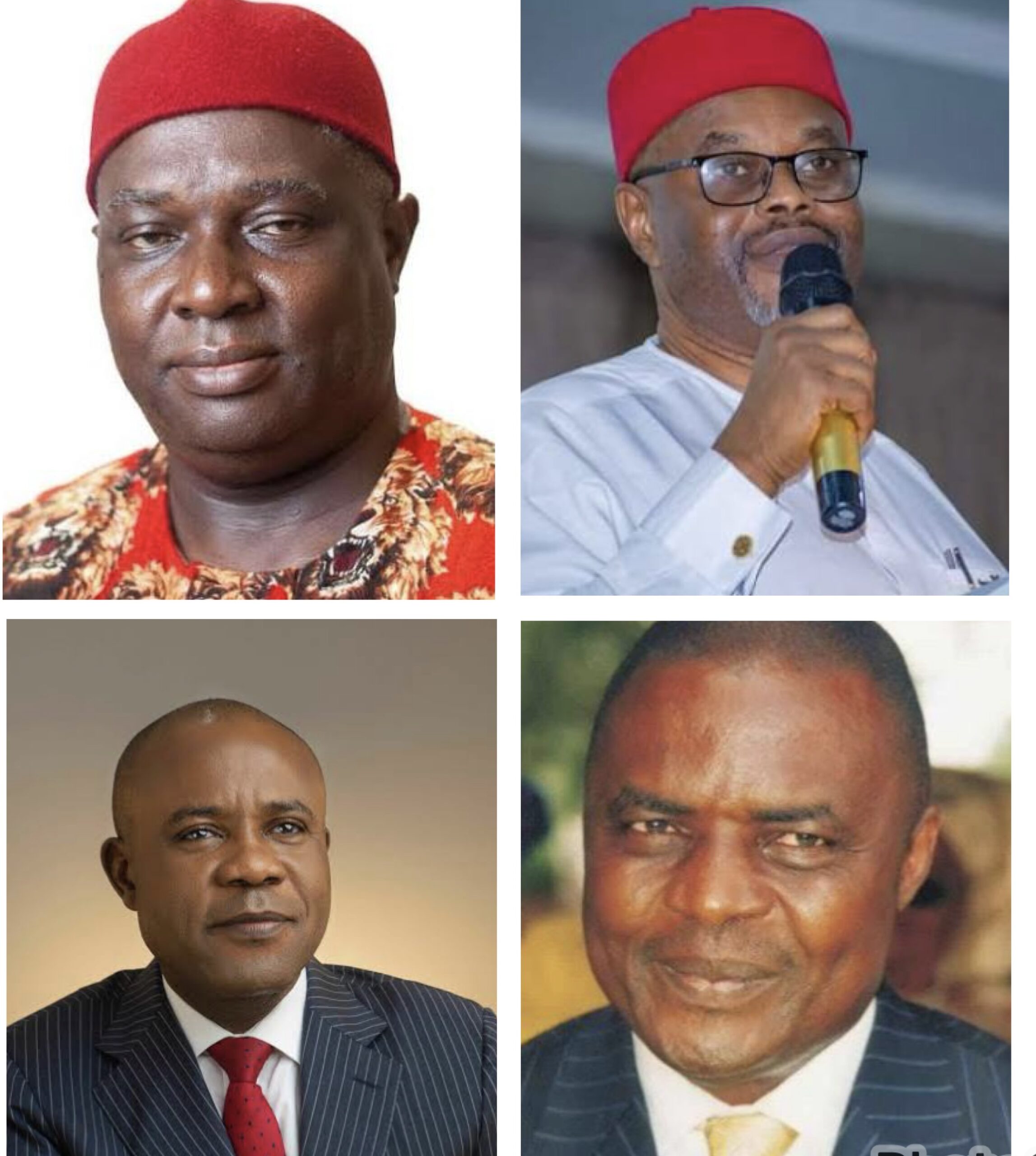
While the Independent National Electoral Commission (INEC) cleared 16 candidates for the ballot, four men dominate the conversation across beer parlors, boardrooms, and town halls:
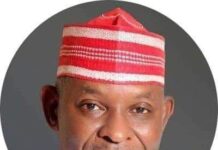
1. Peter Ndubuisi Mbah (APC) — The Technocratic Builder
A lawyer, maritime entrepreneur, and former finance commissioner, Mbah entered office promising “disruptive innovation.” His defection from the PDP to the ruling APC was a calculated political move to align Enugu directly with federal power in Abuja. His pitch to voters is simple: Look around you; the work is visible, let me finish what I started.
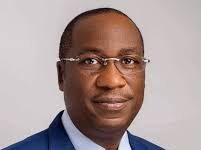
2. Geoffrey Uchechukwu Nnaji (PDP) — The Populist Comeback Kid
A veteran politician and the immediate past Minister of Innovation, Science and Technology, Nnaji took Mbah’s old PDP seat after winning the party’s primary in a landslide.
Knowing that Enugu West and Enugu North voters are fiercely protective of the zoning calendar, Nnaji has made a bold promise: he will serve only one four-year term to complete Enugu East’s turn, while rolling back harsh taxes and halting market demolitions.
3. Chinyeaka Christian Ohaa (NDC) — The Seasoned Insider Turned Reformer
A retired Federal Permanent Secretary who managed major federal ministries, Ohaa is a quintessential administrator. Ironically, he served inside Mbah’s own government as Pro-Chancellor of the Enugu State University of Science and Technology (ESUT) until 2026 before stepping out to fly the flag of the Nigeria Democratic Congress (NDC).
Running on a “Rescue Mission,” he wants to replace what he calls harsh revenue enforcement with humane, predictable governance.
4. Obodoeze Chukwuma Ocho (ADC) — The Anti-Establishment Outsider
Read Also:
An economist, former bank board chairman, and oil-and-gas executive, Ocho is the standard-bearer for the African Democratic Congress (ADC).


While his rivals argue over whose turn it is to rule based on geography, Ocho is running on a platform of pure meritocracy and welfarism—telling voters that competence, not birthplace, should decide who manages their taxes.
In Nigerian politics, campaign speeches are cheap, so smart voters look at the receipts. So, when you place these four men under the microscope, every single one brings compelling strengths—and glaring vulnerabilities.
The Case For and Against Peter Mbah
If you walk through Enugu today, you cannot deny the physical footprint of Mbah’s government. According to his administration’s September 2026 milestone compendium, the state has constructed or reconstructed over 1,521 kilometers of roads, rolled out 260 Smart Green Schools and 260 primary healthcare centers across every ward, revamped the iconic Hotel Presidential, and launched Enugu Air. Supporters and fiscal analysts credit his enforcement of a Treasury Single Account with plugging leakages and boosting state revenue.
Yet, Mbah’s critics have receipts of their own. Opposition parties, including the NDC and ADC, repeatedly point to his unfulfilled 2023 campaign pledge to restore running pipe-borne water across Enugu metropolis within 180 days as a major credibility gap.
Critics also argue that flagship projects cater more to elites than struggling residents, while displaced traders from demolished markets protest rising living costs. Worse still, joining the APC tied Mbah to unpopular federal economic policies—and triggered bitter infighting with founding Enugu APC members who feel sidelined.
The Case For and Against Uche Nnaji
Nnaji’s greatest weapon is public frustration. By promising tax relief, direct support for displaced traders, and a strict four-year tenure limit, he has crafted a message tailored to win over both suffering urban workers and cautious political elders from other zones.
However, Nnaji carries a massive, documented liability: his academic credentials. In October 2025, Nnaji resigned as a federal minister following investigative reports alleging that his University of Nigeria, Nsukka (UNN) degree and NYSC discharge certificate were forged.
During his ongoing Federal High Court trial in Abuja prosecuted by the ICPC, prosecution witnesses from both UNN and the NYSC formally testified in October 2026 disowning the certificates.
Notably, in his 2027 INEC filing, Nnaji dropped his disputed degree claim and listed only his WAEC certificate—a vulnerability his rivals regularly exploit.
The Case For and Against Chinyeaka Ohaa
Ohaa’s civil service record is largely unblemished. Having risen to the pinnacle of Nigeria’s federal bureaucracy without a major corruption indictment, he brings deep institutional memory.
His campaign manifesto offers specific pledges: a 12-month tax relief program for micro and small businesses, an end to arbitrary daily market tolls, and a unified business assessment system.
Even after thugs attacked an NDC ward meeting in Obuoffia in September 2026, Ohaa’s calm decision to foot victims’ hospital bills and preach restraint earned him cross-party respect.
His challenge is purely political muscle. Political commentators question why he remained silent as ESUT Pro-Chancellor inside Mbah’s administration until 2026 if governance was failing.
Furthermore, running on the platform of the smaller NDC means he lacks the financial war chest and statewide grassroots machinery of the APC and PDP.
The Case For and Against Obodoeze Ocho
Ocho represents the boardroom precision many young, educated voters crave. Having led a bank board and driven corporate revenue growth, he advocates for financial inclusion and competence over political patronage.
When rumors swirled in August 2026 that he had stepped down to endorse the PDP, the ADC state leadership publicly reaffirmed his candidacy, and in November 2026 he denied rumors of any political deal with the APC.
Like Ohaa, however, Ocho faces the uphill battle of running outside Nigeria’s two dominant parties—made even steeper by his rejection of zoning, which alienates traditional powerbrokers in Enugu West and Enugu North who are waiting their turn.
The Verdict Belongs to the Street
On February 6, 2027, Enugu voters will step into the ballot booth facing an extraordinary dilemma.
Do they reward Peter Mbah for laying down concrete, roads, and institutional reforms, despite the painful taxes and his controversial switch to the APC?
Do they gamble on Uche Nnaji’s promise of instant economic relief and a four-year exit, despite an active certificate forgery trial? Or do they break the two-party monopoly altogether by trusting the steady bureaucratic hands of Chinyeaka Ohaa or the boardroom reformism of Obodoeze Ocho?
The politicians have played their opening moves and swapped their jerseys. Now, the people of Enugu get to decide who wins.