Kano 2027: Is Abba Heading for an Unopposed Second Term? By Shuaib S. Agaka
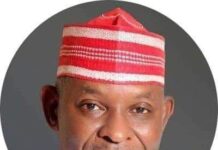
POLITICS DIGEST – As the 2027 governorship election approaches, Kano State is gradually becoming the centre of an intriguing political calculation. Governor Abba Kabir Yusuf is seeking another four years in office, but the question increasingly confronting the state’s political landscape is whether he will face a formidable opposition or benefit from the difficulties confronting his potential challengers.
At first glance, the contest appears to be taking shape around three political figures: the incumbent governor, his former deputy, Aminu Abdussalam Gwarzo, and African Democratic Congress (ADC) contender, Ibrahim Ali Amin, popularly known as Ibrahim Little. However, beneath these emerging political alignments lies a complicated web of party disputes, court proceedings, political loyalties and shifting alliances that could determine who eventually makes it to the ballot.
For Abba, the circumstances could hardly be more interesting. His departure from the New Nigeria Peoples Party (NNPP) to the All Progressives Congress (APC) has significantly altered Kano’s political equation, particularly his relationship with the man who once stood behind his political rise, Senator Rabiu Musa Kwankwaso.
The immediate uncertainty, however, concerns Gwarzo’s candidacy under the Nigeria Democratic Congress (NDC). Despite emerging as the party’s governorship candidate, his name has remained absent from INEC’s published list of Kano governorship candidates. The commission’s list specifically indicated a court order against publishing his name.
The circumstances surrounding his emergence are also important. Gwarzo is not an outsider seeking political relevance. He served as Abba’s deputy governor from May 2023 until his resignation in March 2026 following the political disagreement that accompanied the governor’s defection. Before that, he was chairman of Gwarzo Local Government and Commissioner for State Affairs under Kwankwaso’s administration. His educational background includes National and Higher National Diplomas in Banking and Finance and Accountancy, alongside postgraduate training in Public Policy and Administration.
His political experience and connection with the Kwankwasiyya movement give him an identifiable political constituency. Nevertheless, his biggest obstacle may not necessarily be the strength of his opponents but the internal disagreements within the party that is supposed to provide him with a platform.
The NDC crisis predates Kwankwaso’s arrival. Before the former governor and his political associates joined the party, its existing leadership had already established a structure in Kano. Their arrival consequently created a difficult question: how much of the party’s existing machinery should be surrendered to accommodate a powerful political movement?
The disagreement reportedly centred on the distribution of party positions and elective tickets. Initial negotiations were said to have produced a 60-40 sharing arrangement favouring the Kwankwasiyya bloc. Subsequent discussions reportedly involved a proposed 70-30 arrangement, which was also disputed. Members of the existing structure complained that the incoming group was seeking overwhelming control, while the Kwankwasiyya camp maintained that its political influence and contribution justified a substantial share.
The disagreement eventually developed into accusations of candidate imposition and attempts to sideline longstanding members. In May 2026, the Kano chairman publicly resisted handing over the party structure to Kwankwaso. Although mediation efforts followed, subsequent disputes over nominations demonstrated that the underlying disagreement had not entirely disappeared.
Read Also:
The ADC presents a different kind of uncertainty. Ibrahim Little has positioned himself as an alternative, particularly among voters who may be unwilling to follow either Abba into the APC or Kwankwaso into the NDC. He is not entirely new to Kano’s governorship politics, having previously contested under the defunct All Peoples Party (APP). His political appeal rests partly on his grassroots relationships and longstanding ambition to govern the state.


His educational credentials include a Primary School Leaving Certificate, GCE, Bachelor of Science degree and Master of Business Administration. INEC’s published list identifies Shehu Abdulkadir Bari as his running mate. The ADC has also begun building its campaign structure across the state’s 44 local government areas.
However, Little’s political fortunes are tied to a development beyond the Kano chapter. The Federal High Court judgment of November 5, 2026, nullifying the David Mark-led national leadership of the ADC has introduced another layer of uncertainty. The party has appealed the judgment and sought a stay of execution, but the outcome remains pending. Should the appeal fail, the implications for the leadership under which Little’s nomination was secured could become significant.
Interestingly, the ADC could also benefit from a political situation it did not necessarily create. If Gwarzo eventually fails to secure a place on the ballot, the Kwankwasiyya movement could face a difficult choice. Having broken politically with Abba, its supporters may be reluctant to support the governor for a second term. Little could become an alternative destination for some of those voters.
Abba’s political experience also gives him an advantage that his challengers cannot easily replicate. Before becoming governor in 2023, he served as Commissioner for Works, Housing and Transport under Kwankwaso between 2011 and 2015. His background includes a National Diploma and Higher National Diploma in Civil Engineering and postgraduate business administration qualifications from Bayero University, Kano. His administration’s infrastructure record, alongside its achievements and shortcomings in education, healthcare, employment and security, will provide voters with concrete issues on which to judge his performance.
Yet, perhaps the most consequential development in the political relationship between Abba and Kwankwaso emerged only recently. In a BBC Hausa interview published on November 23, the governor disclosed what he described as an agreement involving himself, Kwankwaso and President Bola Tinubu during the legal battle over the 2023 governorship election. According to Abba, Kwankwaso instructed him to approach Tinubu and promise that they would return to the APC if the president refrained from interfering in the court proceedings and Abba eventually secured victory. He further alleged that Kwankwaso asked him to swear on the Holy Qur’an to demonstrate their commitment.
Abba said his January 2026 defection to the APC was therefore an attempt to honour that understanding, accusing Kwankwaso of subsequently abandoning the arrangement.
The question, therefore, is whether Kano is heading towards a genuinely competitive election or one in which the opposition’s internal problems could inadvertently strengthen the incumbent. If Gwarzo cannot make the ballot and the ADC’s national leadership crisis undermines Little’s candidacy, Abba could find himself without the kind of organised opposition capable of mounting a serious statewide challenge.
Nevertheless, an election is not won simply because opponents encounter difficulties. Kano’s electorate has repeatedly demonstrated that political calculations can change. Kwankwasiyya remains an influential movement, the APC now controls the state government, and the ADC is attempting to establish itself as an alternative. The PDP and other parties also remain part of the wider electoral landscape.
For now, Abba appears to have the advantage of incumbency, federal alignment and a substantial record of government projects. But whether these advantages will translate into a second term is another question. The real suspense lies in whether his opponents can resolve their differences before the election or whether the legal and political battles within their parties will do the work of an opposition campaign against them.
One thing is certain, the 2027 Kano governorship election may be decided long before voters enter the polling booths, depending on who survives the battles within their own political parties.
Shuaib S. Agaka is the Data Analyst for PRNigeria Political Pulse.