Obi Saved Money to Earn Interest while People Suffered — Anambra Govt
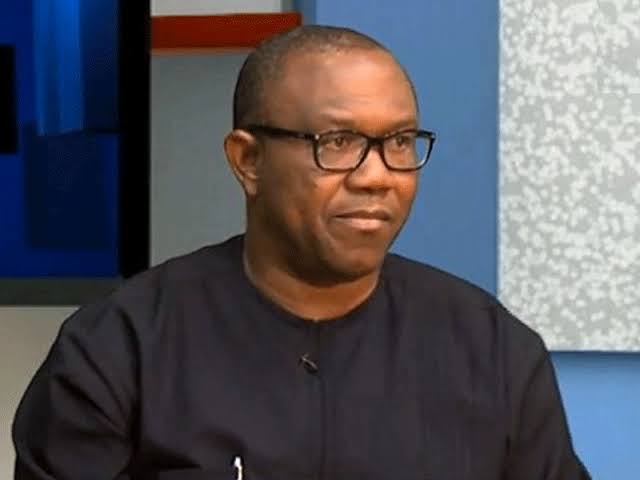
The Anambra State Government has accused former governor Peter Obi of prioritising savings and interest earnings over addressing poverty, insecurity and infrastructure deficits during his eight-year tenure.
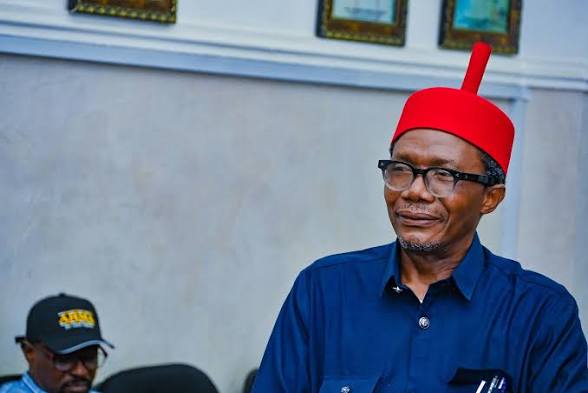
The state Commissioner for Information and Value Reorientation, Law Mefor, made the allegation in a statement issued on Saturday, as the dispute between the state government and Obi over the financial position he left behind continues to intensify.
Mefor also accused Obi, the presidential candidate of the Nigeria Democratic Congress (NDC), of concealing debts allegedly incurred by his administration in the handover note he submitted when he left office in 2014.
The latest development follows repeated claims by the Anambra government that Obi left about $123.77 million in debt at the end of his tenure. According to the state government, the loans were obtained for projects covering malaria control, education, healthcare, erosion management, community development and value-chain development.
Obi has consistently rejected the claim, maintaining that he left more than $150 million in Anambra’s treasury at the end of his administration.
According to the former governor, the funds were invested in various bonds and generated about $10 million in annual income for the state.
“As at the time I left office, the dollar components of my savings invested in various bonds were over $150 million, which gives Anambra State guaranteed income of about $10 million yearly,” Obi said.
He argued that even if the state had owed the $123.7 million claimed by the government, the funds he left behind could have been used to service the debt from the interest generated while preserving the principal.
“Let me assume the worst-case scenario — which is false — that there was $123.7 million owed as of the time I left. I left over $150 million that was earning about $10 million,” he said.
Obi further argued that if the money had been retained and its interest used to service the alleged debt, the loan would have been fully repaid while the $150 million principal remained intact and continued to generate income for the state.
Read Also:


The Anambra government, however, said the argument failed to address the broader responsibilities of government.
On Friday, the state government released documents alleging that Obi’s administration also left N363 million in salary arrears owed to workers, alongside other outstanding financial obligations.
Reacting to Obi’s position, Mefor said the fundamental question was whether government should prioritise accumulating savings and earning interest while citizens faced pressing social and economic challenges.
“Government exists to improve the security and welfare of the people, and not to save money and earn interest,” the commissioner said.
Mefor alleged that Anambra faced significant development challenges during Obi’s tenure, including inadequate infrastructure, weaknesses in public health and education, lack of piped water and more than 900 active gully erosion sites.
He further claimed that 78 of the state’s 179 communities had no public primary schools, while several communities lacked functional primary healthcare facilities.
The commissioner argued that greater investment in human capital and infrastructure could have generated broader social and economic benefits than the interest earned from keeping government funds in banks.
Mefor also contrasted Obi’s savings policy with the spending priorities of his successor, Willie Obiano, arguing that investments in development helped reduce poverty and improve security before the escalation of attacks by unknown gunmen across the South-East from 2021.
“How much money would H.E. Peter Obi ascribe to the lives of the millions of people pulled out of poverty?” Mefor asked.
“Please, Your Excellency, Peter Obi: governance and development are different from trading where everything is primarily about profit and loss account without much consideration for human life.”
The commissioner said savings could have a legitimate role in managing revenue fluctuations, but argued that celebrating accumulated funds and interest earnings as a measure of governance performance, without considering the social conditions of citizens, presented an incomplete picture of development.
Mefor said the debate should therefore focus not only on how much money was saved or inherited, but also on how public resources were deployed to address the needs of citizens during the period under review.