SPECIAL REPORT: How Nigeria is Losing Billions to Illegal Mining
By Ozumi Abdul
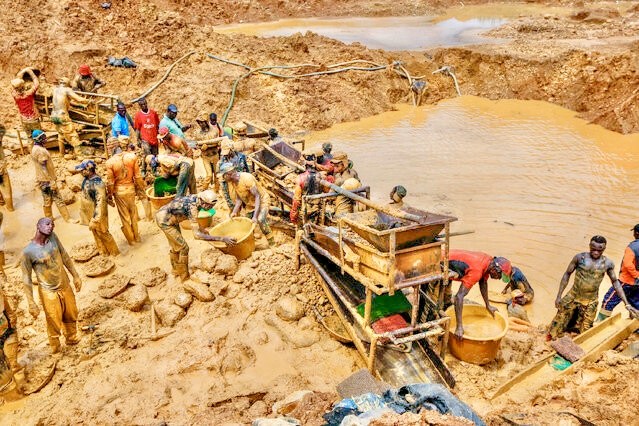
Across Nigeria’s mineral-rich communities, the sounds of excavators and hand-held digging tools echo from dawn till dusk. Beneath the soil lie vast deposits of lithium, gold, tin, lead, zinc, columbite, tantalite and gemstones, resources capable of transforming the country’s economy. Yet, instead of generating prosperity, much of this wealth is slipping through the cracks of illegal mining, smuggling and weak regulation.
While oil has long dominated Nigeria’s economy, the Federal Government has increasingly turned to solid minerals as a pillar of economic diversification. However, experts warn that illegal mining has become one of the biggest obstacles to realizing that ambition.
Recent reports by the Nigeria Extractive Industries Transparency Initiative (NEITI) show that illegal extraction, mineral smuggling, under-reporting of production, trade mispricing and weak oversight continue to fuel illicit financial flows in the mining sector. According to the report, these practices deprive the country of substantial revenue while undermining transparency and sustainable development.
Nigeria possesses more than 40 commercially viable solid minerals distributed across almost every state. These include gold, lithium, tin, coal, limestone, iron ore, lead, zinc, barite, columbite, tantalite and bitumen. The global transition to clean energy has significantly increased demand for critical minerals such as lithium, making Nigeria an attractive destination for investors. Unfortunately, the same opportunity has also attracted illegal operators who exploit weak governance and porous borders.
According to NEITI’s 2023 Solid Minerals Industry Audit Report, Nigeria generated about ₦30.85 billion from the solid minerals sector in 2023, including roughly ₦5.68 billion in royalties. Given the country’s vast mineral deposits, analysts say these earnings remain far below what the sector is capable of generating. The audit also highlighted persistent weaknesses in production reporting, licensing compliance and revenue collection, making it difficult for government agencies to determine the actual value of minerals extracted across the country.
Investigations by NEITI indicate that illegal mining extends far beyond unauthorized excavation. The illicit network often involves unlicensed extraction, mineral smuggling through neighbouring countries, under-declaration of production, illegal export of raw minerals, trade mispricing, money laundering and tax evasion. According to the agency, these practices have become systemic due to institutional weaknesses, inadequate enforcement and poor coordination among regulatory bodies.
Illegal mining has been reported in several states, including Zamfara, Niger, Nasarawa, Plateau, Kaduna, Kebbi, Kogi, Osun and Oyo. Many of the operations take place in remote communities where government presence is limited, allowing illicit operators to work with little oversight. Gold is predominantly mined illegally in Zamfara and Niger, while the rush for lithium has intensified activities in Nasarawa and Oyo states.
Read Also:


The discovery of commercially viable lithium deposits has further increased global interest in Nigeria’s mining industry. Authorities have arrested several foreign nationals, including Chinese citizens, over allegations of illegal mining and unlawful possession of lithium. Security agencies have also intercepted truckloads of illegally mined minerals allegedly destined for export. These developments prompted the Federal Government to establish the Mining Marshals, a specialized security outfit tasked with protecting licensed mining sites and combating illegal mining activities.
Illegal mining is no longer viewed solely as an economic crime. Government officials and security experts warn that proceeds from illegal mining have, in some instances, financed armed groups operating in parts of northern Nigeria. Competition over control of mineral-rich communities has also contributed to violent conflicts, banditry and insecurity in several mining areas, further complicating efforts to restore peace.
The environmental consequences are equally alarming. Illegal miners frequently abandon open pits after extracting minerals, leaving behind dangerous hazards for nearby communities. Rivers become polluted with mining waste, forests are destroyed and agricultural land is degraded. In communities where lead and other heavy metals are mined without proper safeguards, contamination has posed serious public health risks, while environmental remediation has remained inadequate.
Beyond the environmental damage lies a significant human cost. Thousands of artisanal miners, driven largely by poverty and unemployment, work under dangerous conditions without protective equipment or adequate safety measures. Fatal mine collapses, injuries and exposure to hazardous chemicals remain common. In some communities, women and children also participate in informal mining, raising concerns about labour exploitation, child welfare and access to education.
Experts attribute the persistence of illegal mining to several factors, including inadequate numbers of mine inspectors, weak monitoring of mining licences, corruption, poor surveillance of remote mining sites, porous borders and slow prosecution of offenders. NEITI maintains that strengthening governance, improving transparency and enhancing inter-agency collaboration are essential to reducing illicit financial flows in the mining sector.
In response, the Federal Government has introduced a number of reforms, including the deployment of Mining Marshals, suspension of illegal mining operations in some locations, prosecution of offenders, formalisation of artisanal mining cooperatives, promotion of local mineral processing and review of existing mining regulations. Officials say these measures are intended to ensure Nigeria derives greater benefits from its mineral resources while discouraging illegal activities.
However, many experts argue that enforcement alone will not solve the problem. They recommend digitising mineral production records, strengthening royalty collection systems, expanding geological surveys, supporting artisanal miners to obtain legal licences, investing in domestic mineral processing and improving border surveillance to curb smuggling.
They also advocate regular publication of production and export data to enhance transparency and accountability.
Nigeria’s solid minerals sector holds enormous promise. As global demand for critical minerals continues to rise, the country has an opportunity to diversify its economy beyond oil, increase government revenue and create thousands of jobs. Yet, unless illegal mining, mineral smuggling and governance failures are decisively addressed, much of that wealth will continue to benefit criminal networks rather than the Nigerian people.
The challenge is not the absence of mineral resources, but ensuring they are extracted legally, transparently and sustainably. Addressing these issues could unlock one of Nigeria’s most important economic frontiers and position the mining sector as a major contributor to national development.